OpenForge insight
HIPAA-Compliant Mobile Apps in 2026: A Practical Guide
If you’re leading a healthcare product in 2026, you’re not just launching “an app.” You’re putting patient trust, regulatory risk, and brand reputation in a…
November 26, 2025

OpenForge insight
By OpenForge editorial team · Published October 20, 2025 · Updated October 27, 2025
Schedule a Free Demo Schedule a Free Demo TALK TO AN EXPERT What are the top healthcare mobile app trends to watch in 2026? How is artificial intelligence transforming healthcare mobile apps? Why must healthcare apps prioritize compliance? What makes user experience vital in healthcare apps? How does OpenForge support healthcare app innovation?
Learn about healthcare app development and explore strategies, best practices, and real examples driving digital health.
Explore the top mobile app trends in healthcare for 2026, from AI-driven diagnostics and intuitive UX design to new compliance standards. Discover how OpenForge helps organizations build secure, scalable, and patient-focused healthcare apps.
Healthcare technology is advancing rapidly in 2026. App development for healthcare now focuses on creating intelligent, reliable, and compliant mobile solutions that meet patient and provider expectations. Meeting these expectations has become essential for organizations that want to stay competitive in digital health.
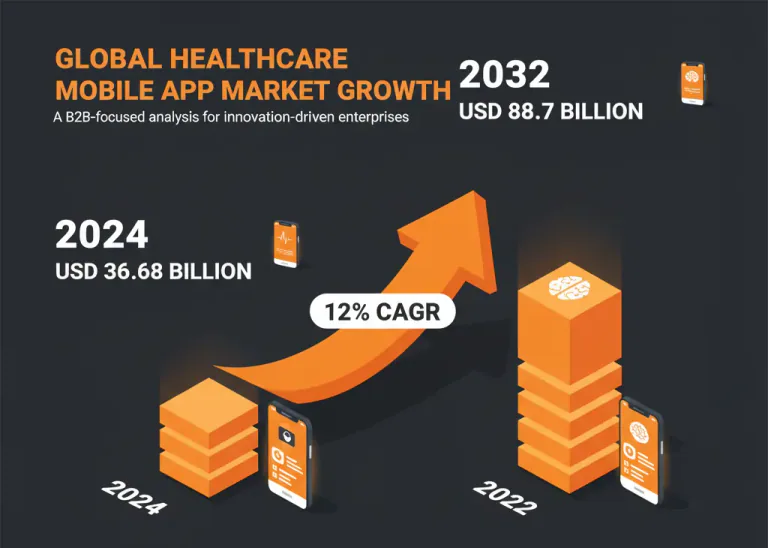
The global market for healthcare mobile apps was valued at USD 36.68 billion in 2024 and is projected to reach nearly USD 88.7 billion by 2032, growing at a CAGR of about 12 percent. This expansion is driven by rising demand for AI-powered diagnostics, wearable integrations, and remote patient monitoring solutions.
Building modern healthcare applications requires expertise in app development for healthcare, balancing innovation with strict compliance standards such as HIPAA and GDPR. That is where OpenForge comes in. Through agile development, deep regulatory knowledge, and human-centered UX design, OpenForge helps healthcare organizations create scalable mobile apps that improve patient outcomes, reduce operational costs, and drive sustainable growth in the evolving landscape of healthcare technology.
Healthcare mobile apps are evolving fast, and app development for healthcare is adapting just as quickly. For healthcare leaders, innovators, and developers, understanding the trends shaping 2026 is essential to stay competitive. Below are the key movements defining the future of digital health.
The mobile health market is growing rapidly as healthcare goes digital. In 2024, the global market for healthcare mobile apps was valued at USD 36.68 billion and is projected to reach USD 88.7 billion by 2032, increasing at a CAGR of about 12 percent. What drives this surge? Rising smartphone adoption, greater acceptance of telemedicine, and a growing need for chronic disease management solutions. In short, more people want healthcare that fits in their pocket.
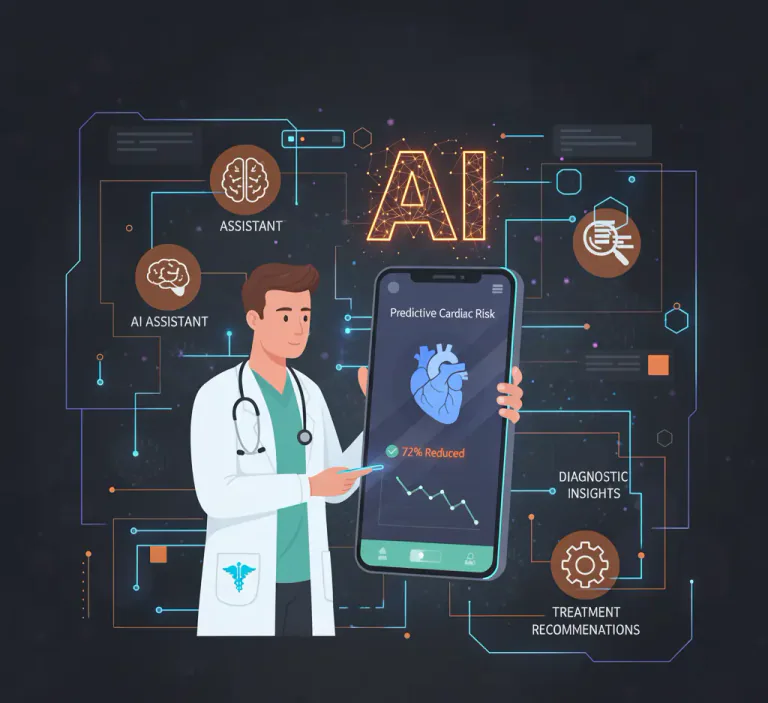
Artificial intelligence is transforming how healthcare works. AI-powered diagnostic tools detect diseases earlier and with higher accuracy. Intelligent chatbots and virtual assistants now manage patient queries, guide medication reminders, and reduce pressure on clinical staff. These apps create faster, more precise, and more personalized care while cutting operational costs. Learn more in our complete guide.
Great design is no longer optional in healthcare apps. Patients expect experiences that are simple, secure, and trustworthy. UX design now plays a major role in compliance with regulations such as HIPAA and ADA, ensuring that every patient can use digital tools confidently. A well-designed interface builds trust, boosts engagement, and supports better health outcomes.
Telemedicine has become part of everyday healthcare. Patients now book video consultations, receive e-prescriptions, and track follow-ups within a single mobile app. The next evolution includes AI-based triage tools that assess symptoms before a patient connects with a provider, saving time for both doctors and patients.
Organizations investing in app development for healthcare are under growing pressure to deliver mobile apps that are easy to use, fully compliant, and powered by advanced technology. These three pillars, user experience, compliance, and artificial intelligence, are not optional anymore. They define whether a digital health product succeeds or fails in 2026.
Patients and clinicians now expect mobile apps that are intuitive, fast, and accessible. Strong healthcare UX design lowers cognitive load, builds trust, and helps users follow treatment plans more consistently. Accessibility is critical, especially for older adults and users with disabilities.
OpenForge applies human-centered design principles to create ADA-compliant healthcare app experiences that feel simple, safe, and personal. By focusing on empathy, the company helps healthcare providers deliver digital tools that serve every type of user effectively.
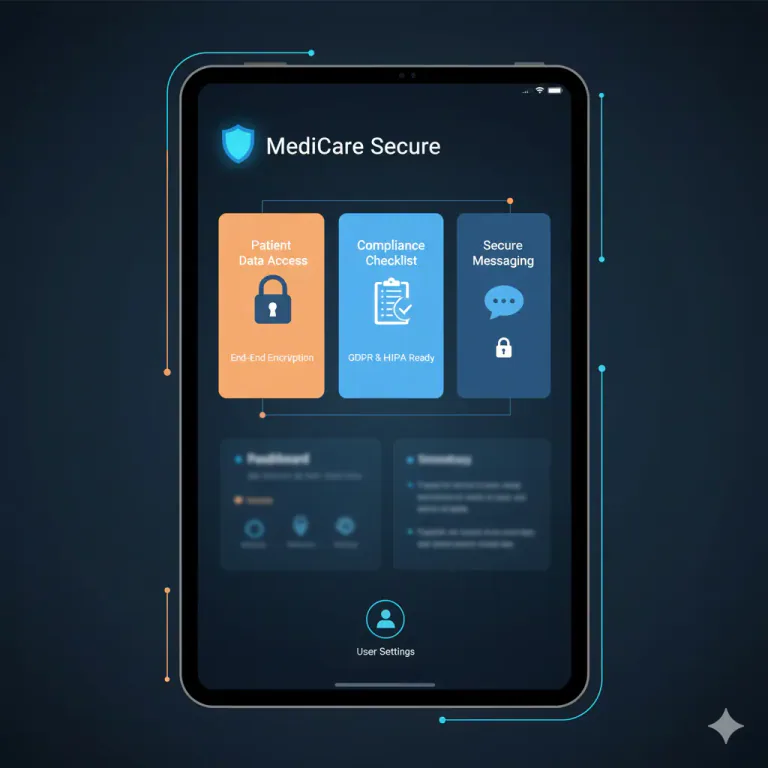
Healthcare apps must meet some of the most complex regulatory standards in any industry. Frameworks like HIPAA in the United States and GDPR in Europe shape how patient data is stored, accessed, and shared. Compliance affects every stage of development, from system architecture to encryption protocols.
Failure to comply can result in heavy fines and lasting reputational damage. Agile teams with deep healthcare experience ensure that apps meet every legal requirement and protect sensitive patient data from risk.
Get expert support to launch and scale your healthcare app
Artificial intelligence is rapidly changing healthcare delivery. Predictive analytics, chatbots, and AI-powered diagnostic tools are helping clinicians save time and make better decisions. The global AI in healthcare market is expanding at a compound annual growth rate of 46.2 percent between 2021 and 2027, highlighting its extraordinary potential.
When used responsibly within compliance frameworks, AI creates apps that are faster, smarter, and more personal. It enhances both patient experience and clinical efficiency, paving the way for more proactive care.
Mastering UX, compliance, and AI gives healthcare organizations a clear competitive edge. Teams that invest in these areas create digital solutions that patients trust and regulators approve.
OpenForge brings together deep UX expertise, compliance knowledge, and AI innovation to help healthcare companies deliver measurable business value and improved patient outcomes in 2026 and beyond.
To maximize visibility and user adoption after launch, healthcare organizations can also explore OpenForge’s Mobile App Marketing Solutions to drive engagement and long-term growth.
The landscape of app development for healthcare is transforming fast. New technologies are changing how patient data is secured, how care is delivered, and how users interact with digital health platforms. Staying ahead means embracing innovation early and building smarter, more reliable apps that improve outcomes for both patients and providers.
Blockchain is emerging as one of the most reliable tools for protecting medical data. It creates a decentralized and tamper-proof ledger that enhances trust between patients, providers, and regulators. With transparent recordkeeping and verifiable transactions, blockchain technology can dramatically reduce data breaches and fraud in healthcare.
The global blockchain in healthcare market is projected to grow at 38.1 percent CAGR and reach USD 4.46 billion by 2026.
Remote patient monitoring allows clinicians to track vital signs and other health data through wearables and mobile apps. Patients can stay home while still receiving continuous oversight. RPM improves chronic disease management, reduces hospital visits, and supports early intervention.
Artificial intelligence is reshaping how healthcare professionals make decisions. Predictive analytics now help identify at-risk patients before conditions worsen. Virtual assistants and chatbots provide around-the-clock support, from answering questions to sending medication reminders.
These AI-driven tools reduce clinician workload, improve engagement, and make healthcare delivery more efficient.
Wondering what healthcare app development really looks like with AI?
The Internet of Medical Things connects medical devices, sensors, and mobile apps to create a network of real-time data. This technology enables continuous monitoring, data analysis, and proactive care management. It also gives healthcare providers deeper insights to improve diagnostics and treatment.
By adopting these emerging technologies, healthcare organizations can deliver more secure, personalized, and efficient care. Blockchain ensures trust. AI predicts risks. IoMT powers real-time monitoring. Together, they form the foundation of next-generation healthcare apps.
OpenForge helps healthcare innovators incorporate these advancements seamlessly into new development projects. With expertise in UX, AI, and compliance, OpenForge partners with clients to build future-ready apps that lead the digital health transformation in 2026 and beyond
For a deeper look at how mobile technology is evolving across industries, explore The Future of Mobile Apps: Trends, Niches, and Startup Opportunities on the OpenForge blog.
Successful app development for healthcare demands more than just coding. It requires deep understanding of patient needs, regulatory frameworks, and user-centered design. OpenForge combines all three to help healthcare organizations turn complex challenges into innovative digital solutions.
As a trusted healthcare app development company, OpenForge specializes in creating scalable, compliant, and intuitive mobile applications that deliver measurable results. Our team integrates advanced AI, HIPAA-compliant architecture, and seamless UX design to ensure every product not only meets but exceeds user and industry expectations.
Whether you are building a telemedicine platform, a patient engagement app, or an AI-powered diagnostic tool, OpenForge provides the technical expertise and strategic partnership needed to bring your vision to life. From concept to launch, our agile process ensures faster delivery, reduced risk, and lasting impact.
Schedule a Free Consultation today and see how OpenForge can help you lead the next generation of healthcare innovation.
Key trends in app development for healthcare include expanding telehealth services, integration of AI and machine learning, stronger data privacy, wearable device connectivity, and remote patient monitoring. These technologies improve patient access, diagnostic accuracy, and engagement across the care journey.
AI is reshaping mobile health through predictive analytics, personalized recommendations, and virtual assistants that support continuous care. It reduces clinician workloads and enhances patient experience with faster, smarter, and more adaptive app interfaces.
Healthcare data is among the most sensitive types of information. Regulations like HIPAA and GDPR ensure privacy, security, and ethical data use. Compliance protects organizations from penalties and builds the trust that drives patient adoption.
An intuitive interface improves adherence and satisfaction. Patients are more likely to engage with apps that feel simple and reliable, especially older adults or those with accessibility needs. Effective UX design makes complex health tasks easy to complete and promotes consistent, confident use.
OpenForge helps healthcare organizations design and build secure, compliant, and AI-powered mobile apps. Through agile development, strong UX expertise, and deep knowledge of healthcare regulations, OpenForge delivers scalable solutions tailored to each client’s goals and patient needs.

Continue reading
OpenForge insight
November 26, 2025
OpenForge insight
September 22, 2025
OpenForge insight
February 20, 2026