OpenForge

Solution

ChatGPT Plugin & MCP Development

Product strategy, MCP server engineering, optional plugin UI, authentication, testing, and review-readiness support for useful ChatGPT and Codex integrations.
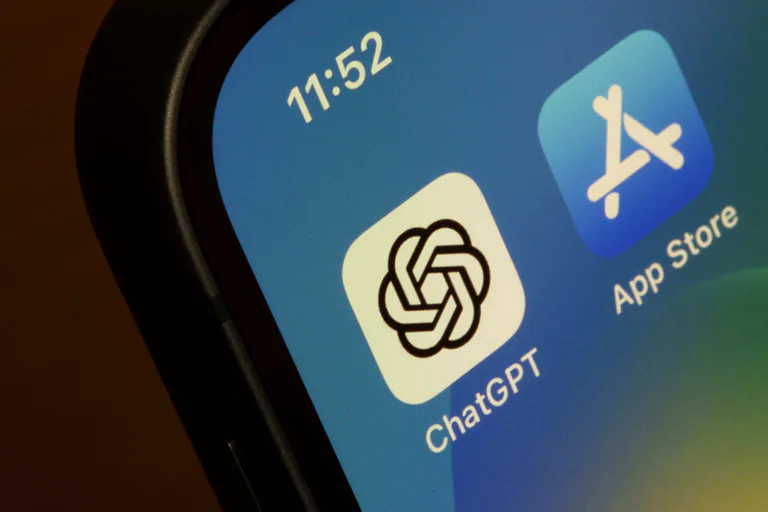
featured image for ChatGPT app development (1) (1)

Build a useful workflow before building a broad AI integration

OpenForge helps teams identify a bounded user task, decide which systems and actions it requires, and validate the workflow before committing to a larger ChatGPT integration. The first milestone is evidence that the experience is useful, understandable, and safe enough to continue—not an unsupported promise of enterprise scale.

Current OpenAI platform terminology

OpenAI’s current documentation describes plugins as packages that can contain skills, an MCP server, or both. MCP means Model Context Protocol: an open specification for connecting AI clients to external tools and data. A plugin can also return optional UI when people need to inspect, edit, compare, confirm, or navigate structured information.

Where OpenForge can help

  • Product discovery and a narrowly defined, testable use case
  • Tool contracts, structured inputs and outputs, and error behavior
  • Remote MCP server implementation and integration with authorized systems
  • Optional plugin UI for review, editing, comparison, or confirmation workflows
  • Authentication, authorization, privacy, observability, and operational planning
  • Developer-mode testing, evaluation, deployment readiness, and submission support

Security and compliance are designed and verified per deployment

A responsible implementation uses least-privilege access, explicit user consent, data minimization, input validation, careful logging, and confirmation for consequential actions. Authenticated MCP servers are expected to implement the applicable OAuth 2.1 authorization flow. OpenForge can design and test these controls, but compliance and security are not blanket guarantees; they depend on the customer’s data, systems, policies, vendors, configuration, and independent review.

From proof of concept to review-ready submission

  • Decide — define the user, job, allowed actions, success measure, and reasons not to automate
  • Validate — prototype the conversation, tool calls, UI, permission boundaries, and failure paths
  • Forge — implement the smallest production-worthy plugin shape and connect the required systems
  • Grow — evaluate real usage, improve reliability and discovery, and expand only where evidence supports it

Public distribution is not automatic. OpenAI reviews submitted plugins, review timing can vary, and OpenAI controls approval. After approval, the developer chooses when to publish. OpenForge can prepare and support a submission but cannot promise acceptance, timing, availability, ranking, or adoption.

Proof and scope

OpenForge’s public case-study library does not currently identify a completed ChatGPT plugin engagement. This page therefore describes a service capability grounded in product strategy, integration, mobile UX, and software-delivery experience; any proposal should define the specific proof, architecture, and acceptance criteria for the customer’s use case.

Frequently asked questions

Is a plugin the same as an MCP server?

No. A plugin is the package people discover and install. It can contain skills, an MCP server, or both. The MCP server is optional and is used when the plugin needs controlled tools, live data, authentication, actions, or server-side behavior.

Does every plugin need custom UI?

No. Structured tool results or model-readable text may be enough. UI is useful when a person needs to inspect, edit, compare, confirm, or navigate information.

Can OpenForge guarantee public listing or enterprise compliance?

No. OpenAI controls review and approval, and compliance depends on the complete implementation and operating environment. OpenForge can help prepare evidence, controls, tests, documentation, and a review-ready submission.

Selected organizations OpenForge has worked with across different engagements

These logos represent OpenForge’s broader client history. They do not imply that every organization purchased the specific service described on this page.


Logo of Schedulicity, a Vagaro company, featuring a purple circular icon with a stylized 'S' symbol, followed by the company name in bold purple text. Below it, 'a Vagaro company' is written in a mix of gray and red text.
Logo of Edwards Lifesciences featuring a stylized gray emblem with geometric shapes forming the letters 'E' and 'L,' alongside the company name 'Edwards' in black serif font.
Logo of America's Test Kitchen featuring white uppercase text on a red background, with 'AMERICA'S' in a smaller font above 'TEST KITCHEN,' which is bold and prominent. Horizontal lines flank 'AMERICA'S' for visual emphasis.
Logo of Panorama Education featuring a green square with white intersecting lines forming geometric shapes above the company name. 'PANORAMA' is written in bold, uppercase navy blue letters, with 'EDUCATION' in a smaller uppercase font below.
Logo of Medical Mutual featuring a stylized teal emblem resembling interwoven lines above the company name in black serif font.
Logo of the Raymond app featuring bold, uppercase red text spelling 'RAYMOND' in a thick, modern font.
Logo of AprilAire featuring the brand name in blue title case letters with a stylized wave symbol to the left, representing air quality and ventilation.
Logo of the New Ocean app featuring the words 'new ocean' in lowercase black letters. The 'o' in 'ocean' is stylized as a blue circular wave icon with a globe inside.

Compare the options

Related services and guidance

Solution

Mobile App Strategy & Development

A boutique mobile app development company combining product strategy, UX, AI-assisted engineering, and senior delivery from Philadelphia.

Solution

Capacitor App Development

Capacitor architecture, native-plugin integration, Cordova migration, release engineering, and app modernization for web-skilled product teams.

Solution

Flutter App Development

Flutter product engineering for teams evaluating Dart, custom rendering, shared mobile code, native integrations, and long-term application ownership.