Schedule a Free Demo Schedule a Free Demo Schedule a Free Demo TALK TO AN EXPERT 1. What is real-money gaming app compliance? 2. Are real-money gaming apps legal in the US? 3. Why are payments risky in real-money gaming apps? 4. How does KYC affect gaming app UX? 5. What will change for gaming apps by 2026?
Real-money gaming apps operate at the intersection of technology, finance, and regulation, and that intersection is becoming more complex every year.
By 2026, building or scaling a real-money gaming app in the United States will require far more than engaging gameplay or smooth payments. Founders and product teams will need to navigate evolving compliance frameworks, fragmented state regulations, stricter payment controls, and heightened risk expectations from regulators, banks, and platform providers.
This article breaks down what real-money gaming apps need to understand about payments, compliance, and risk in 2026, and why these considerations must be treated as product strategy decisions, not legal afterthoughts.
Table of Contents
What Is a Real-Money Gaming App?
A real-money gaming app allows users to wager, stake, or win real currency or cash-equivalent rewards through gameplay. This includes skill-based games, fantasy sports, betting platforms, and certain sweepstakes models, depending on jurisdiction.
In the US, these apps are regulated not just as games, but often as financial and gambling products, placing them under intense scrutiny.
Why Payments and Compliance Are Central to Product Viability
In real-money gaming, payments are not just infrastructure; they are regulatory signals.
Every transaction communicates:
- User identity
- Geographic eligibility
- Source of funds
- Risk exposure
- Regulatory compliance
By 2026, regulators and payment providers will increasingly expect compliance-by-design, not compliance layered on after launch.
Get expert support to launch and scale your mobile app
The US Regulatory Reality: Fragmented and Unforgiving
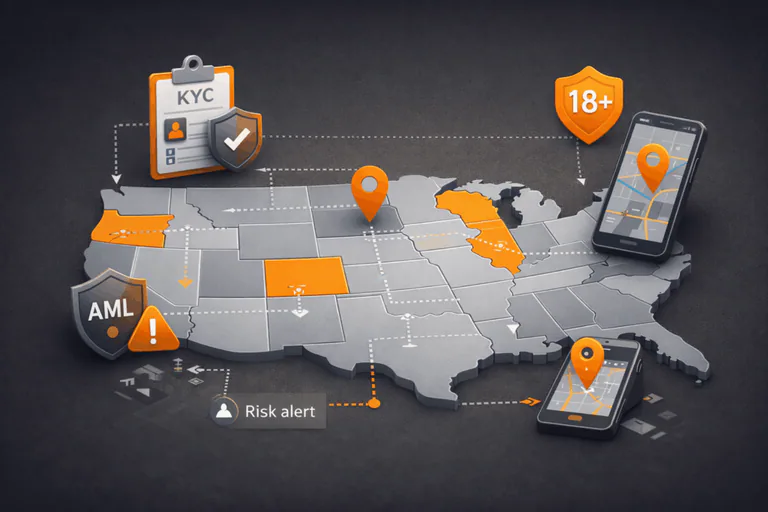
Unlike many global markets, the US does not have a single national framework for real-money gaming.
Instead:
- Regulations vary by state
- Legal definitions differ by game type
- Payment permissions change frequently
- Enforcement is inconsistent, but consequences are severe
For product teams, this means compliance must be:
- Location-aware
- Dynamically enforceable
- Auditable at all times
Ignoring this complexity is one of the fastest ways real-money gaming apps fail.
Payments in Real-Money Gaming Apps: What Changes by 2026
1. Payment Providers Are Becoming Gatekeepers
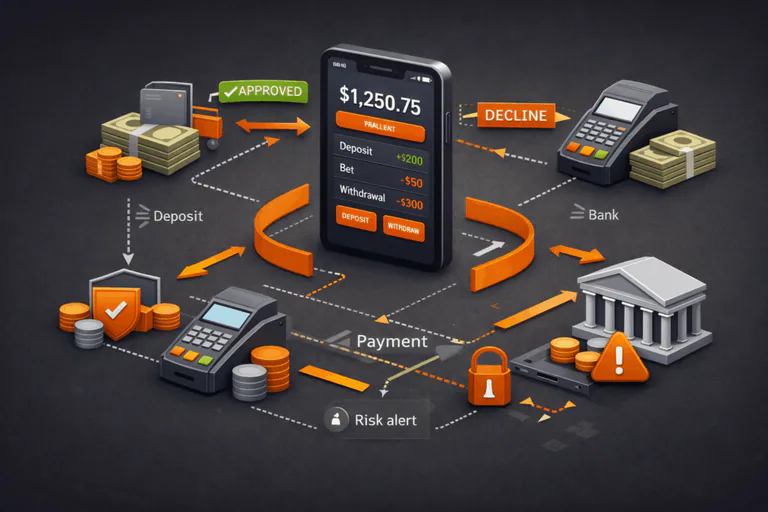
Banks, card networks, and PSPs are no longer neutral rails.
By 2026, most payment providers will require:
- Explicit gaming classification
- Enhanced due diligence
- Ongoing compliance reporting
- Clear risk mitigation controls
Apps that cannot demonstrate control over fraud, abuse, and eligibility will struggle to maintain payment access.
2. KYC and AML Are UX Problems Now
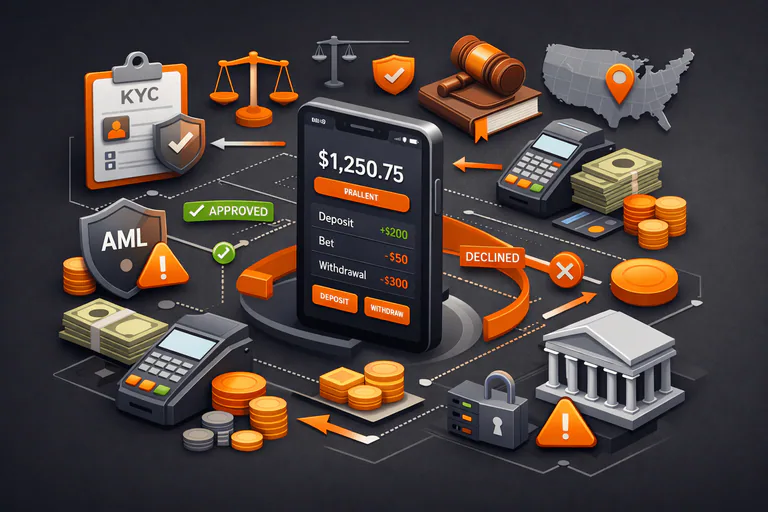
Know Your Customer (KYC) and Anti-Money Laundering (AML) are no longer backend processes.
They directly affect:
- User onboarding
- Conversion rates
- Drop-off
- Trust perception
Poorly designed compliance flows create friction. Well-designed ones build confidence without slowing growth.
3. Payment Failures Are Product Failures
Declined transactions, frozen withdrawals, or delayed payouts erode trust instantly.
In real-money gaming, payment reliability is not a technical metric; it’s a core retention driver.
Compliance Risks That Will Matter More in 2026
Regulatory Drift
Rules evolve faster than product roadmaps. Apps must adapt continuously.
Platform Risk
App stores, cloud providers, and payment processors can suspend services without notice.
Fraud and Abuse
Account takeovers, bonus abuse, and collusion remain persistent threats.
Data & Audit Exposure
In regulated industries, “we didn’t log it” is not a defense.
Wondering what mobile app development really looks like?
Designing Compliance Into the App Architecture
Successful real-money gaming apps treat compliance as part of the product system.
This means:
- Modular payment logic
- Configurable jurisdiction rules
- Clear separation of game logic and financial flows
- Real-time monitoring and alerts
By 2026, static compliance models will not survive.
Measuring Risk Beyond Fraud Metrics
Risk management is broader than chargebacks.
Mature teams track:
- Geographic violations
- Verification failure rates
- Withdrawal friction
- Payment retry patterns
- User trust signals
These insights guide both compliance and growth decisions.
Where Teams Commonly Get It Wrong
- Treating compliance as legal paperwork
- Choosing payment providers too late
- Designing UX before understanding regulations
- Assuming “skill-based” equals unregulated
- Scaling before compliance systems mature
In real-money gaming, shortcuts compound quickly.
Want to explore solutions tailored to your team?
Final Perspective: Compliance Is a Competitive Advantage
By 2026, the most successful real-money gaming apps will not be the most aggressive; they will be the most prepared.
Teams that embed payments, compliance, and risk into product strategy:
- Scale faster
- Lose fewer users to friction
- Earn trust from regulators and partners
- Survive platform and policy changes
OpenForge collaborates with teams developing complex, regulated applications where payments, user experience, and compliance must work in tandem, not in opposition.
Schedule a Free Consultation to design real-money gaming apps that are built for compliance, scale, and long-term viability.
Frequently Asked Questions
Real-money gaming app compliance refers to meeting legal, financial, and regulatory requirements governing payments, user eligibility, and risk controls.
Legality depends on the game type and state-specific regulations, making compliance highly fragmented.
Payments expose apps to fraud, AML violations, and regulatory scrutiny, making them a primary risk surface.
Poorly designed KYC flows increase drop-off, while well-designed flows build trust and legitimacy.
Stricter payment controls, higher compliance expectations, and increased accountability across platforms.