OpenForge insight
How to Create an AI Chatbot App in 2025: Ultimate Step-By-Step Guide
Learn how to create an AI chatbot app in 2025 with this guide. Compare tools, tech stacks, and discover the smartest build strategies.
July 18, 2025

OpenForge insight
By OpenForge editorial team · Published July 23, 2025 · Updated August 25, 2025

Schedule a Free Demo Book Your Free Consultation Book Your Free Consultation TALK TO AN EXPERT 1. ❓What are worldbuilding tools used for in app development? 2. ❓How can founders use worldbuilding tools to improve app UX? 3. ❓ Why are AI storytelling and worldbuilding important for apps in 2025? 4. ❓What are the benefits of using AI in worldbuilding apps? 5. ❓How do I choose the right development partner for a storytelling app?
Discover how creative founders are using AI and worldbuilding tools to design immersive, story-driven apps that emotionally connect with users
Worldbuilding is no longer just the realm of fantasy writers and game designers, it’s quickly becoming a strategic advantage for app founders building the next wave of immersive, story-driven products.
In 2025, consumers aren't just downloading apps for functionality, they're seeking meaning, immersion, and emotional connection. Nowadays, consumers prefer emotional engagement as a key factor in their digital product choices. This signals a turning point: successful apps must go beyond features and begin telling stories.
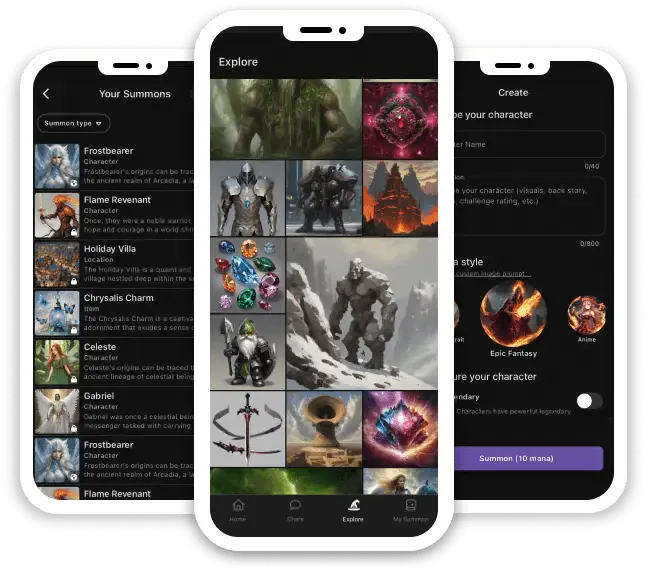
Worldbuilding tools, once reserved for novelists or RPG creators, now empower founders to design apps with narrative logic, character progression, and user-personalized arcs, adding emotional depth to digital interactions. Platforms like Summon Worlds and AI Dungeon are leading examples of this shift, combining artificial intelligence with structured creativity to build worlds users want to stay in.
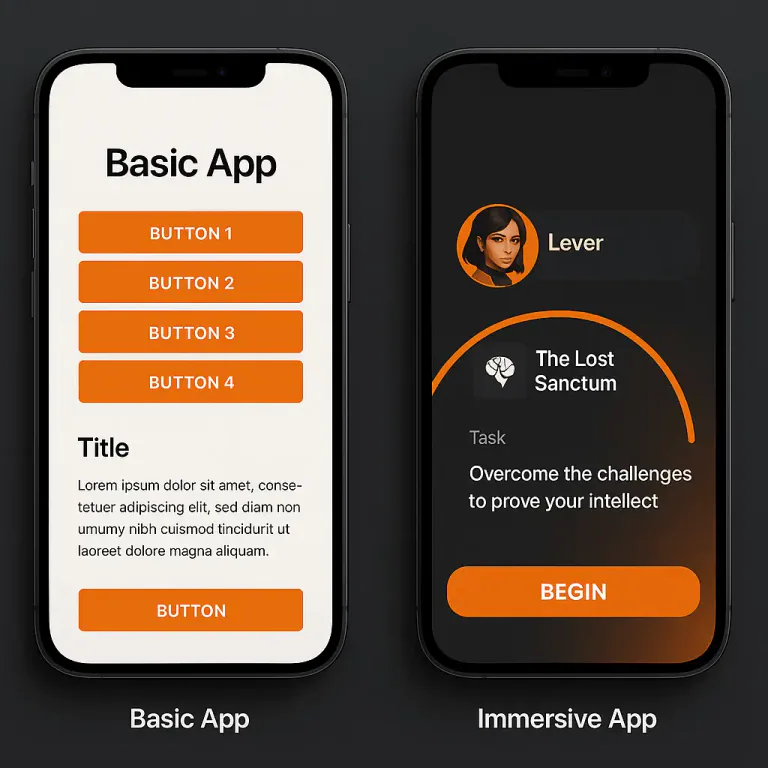
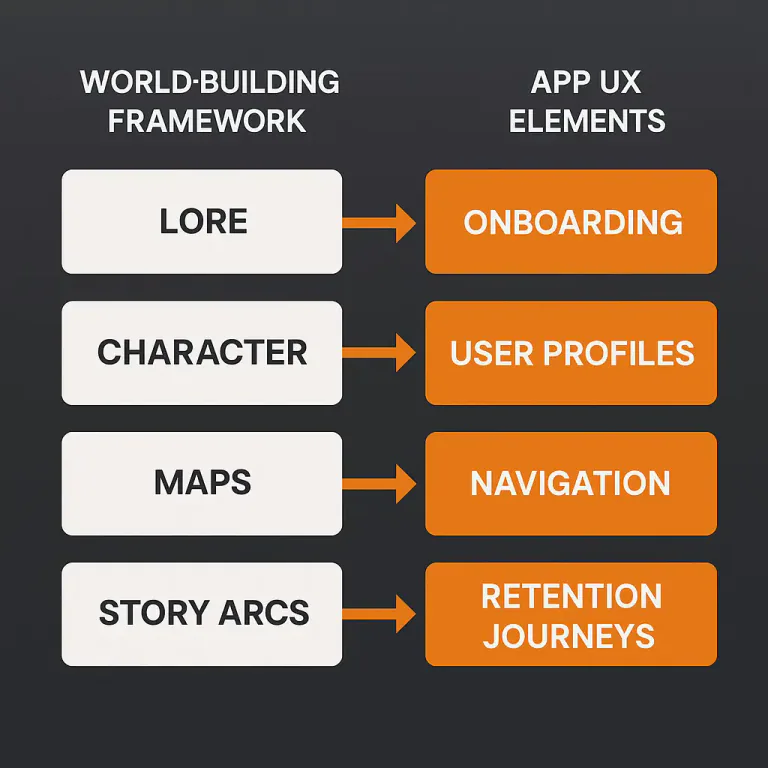
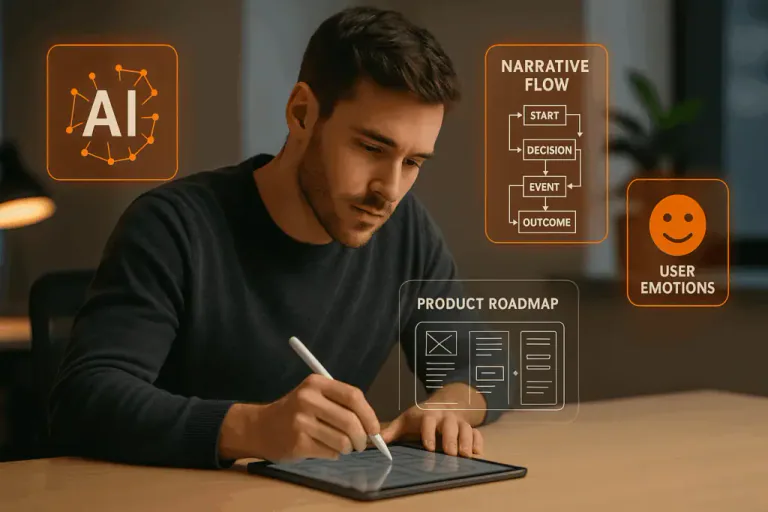
Forward-thinking startup founders are applying worldbuilding frameworks as UX design tools. Rather than planning features in isolation, they're crafting product narratives with interactive layers, letting users shape their journey inside an app, much like a character in a story. This strategy not only boosts engagement and retention but also differentiates their product in a saturated marketplace.
Founders who understand the psychology of story, and pair it with the power of AI tools, are redefining what apps can be. In this article, we’ll explore how worldbuilding tools are fueling the creative edge for product innovators, how to turn them into AI-driven features, and what to look for in the right development partner.
Worldbuilding tools are moving beyond fantasy fiction and finding their place in the startup world, especially for founders who want to design immersive, AI-powered products that stand out in saturated markets.
Worldbuilding tools were originally created to help writers, game designers, and filmmakers build complex universes, complete with characters, lore, maps, and timelines. In today’s tech landscape, however, these same tools are being adapted as frameworks for product design and app UX.
Instead of creating a fantasy realm, founders now use worldbuilding structures to craft personalized user journeys, modular content blocks, and branching logic that reacts dynamically to user input. Platforms like Summon Worlds use AI-driven narrative scaffolding to help authors structure their fictional universes, and that same logic can be applied to how users navigate digital products.
In short, a worldbuilding tool in a product context is a system that lets founders:
This shift is about treating the app not as a static tool, but as a living world that the user steps into, where their actions shape the experience.
The bar for engagement has been raised. According to Salesforce’s State of the Connected Customer Report, 73% of customers say they feel brands treat them as unique individuals, up from just 39% in 2023. This shift reflects a growing demand for personalized, emotionally intelligent experiences. Today’s users no longer want to simply complete tasks; they want to feel like characters inside a story, guided, challenged, and emotionally invested.
Founders and product managers who adopt worldbuilding tools:
By 2026, apps that don’t integrate some form of adaptive or story-driven UX may struggle to compete, particularly in the SaaS, creative, education, wellness, and gaming niches.
This is why many forward-thinking founders now treat narrative logic the same way they treat data logic, as core infrastructure
Several creative tech platforms are already paving the way. Here are three notable examples:
These tools show us that worldbuilding isn’t just a creative exercise, it’s a product strategy.
As generative AI becomes more powerful, founders who know how to build with narrative logic will be better positioned to lead new categories of immersive, meaningful applications.
Wondering what custom app development really looks like with AI?
Creative founders are no longer just building apps, they’re building experiences, powered by narrative frameworks and generative AI. Worldbuilding tools are now playing a foundational role in helping these entrepreneurs design products that feel personalized, immersive, and emotionally intelligent.
As large language models (LLMs) become more accessible, founders are embedding AI storytelling directly into their product interfaces. This goes far beyond chatbots or auto-generated text. Instead, they’re using AI storytelling to structure user journeys, adjust in-app content dynamically, and even craft fictional universes that evolve based on interaction.
For example:
By combining worldbuilding tools with AI content generation, founders can create experiences where every user becomes the protagonist. And that’s the emotional hook that drives long-term loyalty.
A Heliverse article reports that AI now enables “highly personalized content tailored to individual preferences and behaviors, including entire narratives created for a single user based on their digital interactions”
Narrative integration isn’t limited to creative tools. We’re seeing SaaS tools and niche platforms across multiple industries adopt worldbuilding strategies to:
Even in productivity, HR, or coaching apps, prompt app interfaces inspired by worldbuilding tools are gaining traction. These enable modular interactions, contextual prompts, and content generation that feels organic and personalized.
And for early-stage startups, this approach provides a lightweight way to add emotional depth without massive content overhead, because AI handles the variation.
Many founders begin their journey with popular AI writing tools like:
However, while these tools are useful for prototyping, they’re not turnkey solutions for app integration.
Here's what they don't do:
This is where working with an experienced dev partner becomes essential. Founders need more than just a writing assistant, they need a system.
To create a true AI product, the AI must be embedded into the logic of the platform, not just its content. That’s the next section’s focus.
Let’s explore how to bring your app to life, custom, scalable, and future-ready.
If you’re ready to turn your narrative-based product vision into reality, the next big decision is choosing a development team that understands both creative AI and functional app infrastructure.
Worldbuilding-powered products aren’t built like traditional apps. They require more than just frontend design and backend development. Founders need a team that understands:
Your development partner should go beyond execution, they should co-create your product as a narrative system.
Unfortunately, most generalist dev agencies lack the creative or technical fluency to work in this space. They can implement features, but not stories.
At OpenForge, we’ve helped startups and product teams across education, wellness, writing, and entertainment industries launch AI-integrated, worldbuilding-powered apps from idea to MVP.
What sets us apart:
We don’t treat AI like a bolt-on feature. We treat it like part of your product’s soul. And we build accordingly.
Whether you're building a platform for creators, a gamified coaching app, or a fictional universe powered by prompts, we help founders transform their ideas into functional, scalable products that users feel.
Not sure what to ask a dev team before you start?
Here’s a practical checklist to help you vet the right partner:
✅ Do they understand how AI storytelling works within UX logic? ✅ Can they integrate structured content systems like worldbuilding frameworks? ✅ Do they support prompt app architecture or modular narrative design? ✅ Can they help you go from idea to MVP, including LLM integration? ✅ Have they worked with creative founders and SaaS tools before?
If you’re nodding along, then you're ready to take the next step
The most successful apps in 2025 won’t just function, they’ll feel. They’ll guide users through immersive experiences, adapt like living worlds, and create emotional loyalty through narrative.
What began as tools for fiction writers have now evolved into some of the most powerful frameworks for app founders. Worldbuilding tools, when combined with AI, allow you to:
Whether you’re launching a storytelling app, building a wellness platform, or experimenting with creative AI content generation, these tools can anchor your product in meaning and differentiation.
And with tools like Summon Worlds, AI Dungeon, or your own proprietary universe, the future is in your hands.
To make this vision real, founders need more than code. They need a team that speaks the language of:
That’s where OpenForge comes in. We specialize in helping creative entrepreneurs and SaaS innovators turn big, narrative-driven ideas into custom-built products, complete with AI, storytelling logic, and beautiful user experiences.
Worldbuilding tools help founders design immersive, story-driven user experiences by structuring content, logic, and narrative paths inside their apps. In app development, they are used to build modular worlds, adaptive onboarding systems, gamified experiences, and AI-generated content frameworks.
Founders can use worldbuilding tools to map out emotional journeys, define user roles (like characters), and create branching experiences that respond to actions. These systems increase session time, user engagement, and retention, especially when paired with AI storytelling tools.
In 2025, users expect apps to feel human, adaptive, and emotionally resonant. According to Gartner, 70% of users make decisions based on emotional connection. AI storytelling and worldbuilding tools help apps meet these expectations by blending generative content with narrative UX.
The key benefits include: Scalable content creation, Personalized user journeys, Reduced time-to-market for MVPs, Deeper emotional engagement, Enhanced storytelling without a full content team. Tools like ChatGPT, Claude, and Summon Worlds let founders prototype and expand their worlds quickly, ideal for startups.
Look for a team with: Experience in AI integration and storytelling app architecture, Understanding of worldbuilding logic and content systems, Proven success working with creative entrepreneurs and SaaS tools, A consultative approach to UX and product design.
Continue reading
OpenForge insight
July 18, 2025
OpenForge insight
December 14, 2025
OpenForge insight
October 20, 2025