Schedule a Free Demo Schedule a Free Demo TALK TO AN EXPERT 1. How do fintech apps stay compliant in 2026? 2. Does compliance reduce fintech ROI? 3. What role does architecture play in fintech compliance? 4. Is fintech app security a UX issue? 5. What will matter most for fintech apps in 2026?
Fintech app development is no longer just about building fast, elegant products.
By 2026, success in fintech will depend on a more difficult balancing act: delivering strong ROI while meeting increasingly strict security and compliance requirements, without slowing innovation.
As regulations tighten, platforms become less forgiving, and users grow more risk-aware, fintech teams can no longer treat compliance and security as backend concerns. These elements now shape architecture, UX, timelines, and profitability.
This article explains how fintech apps can stay compliant while still delivering ROI in 2026, and why architecture decisions, not legal checklists, are the key to making it work.
Table of Contents
What Is Fintech App Development in 2026?
Fintech app development in 2026 involves building financial applications that operate under strict regulatory oversight while remaining scalable, secure, and commercially viable.
Modern fintech apps typically involve:
- Sensitive financial data
- Real-time transactions
- Third-party integrations
- Ongoing regulatory obligations
- High user trust expectations
Unlike traditional apps, fintech products are judged not only on usability, but on risk management, resilience, and transparency.
Why Compliance and ROI Are No Longer Opposites
For years, fintech teams treated compliance as a cost center, something that slowed delivery and reduced margins. That mindset is now outdated.
In 2026:
- Non-compliance leads to shutdowns, not just fines
- Security failures destroy brand trust instantly
- Poor architecture inflates long-term operating costs
- Platforms and payment providers enforce compliance proactively
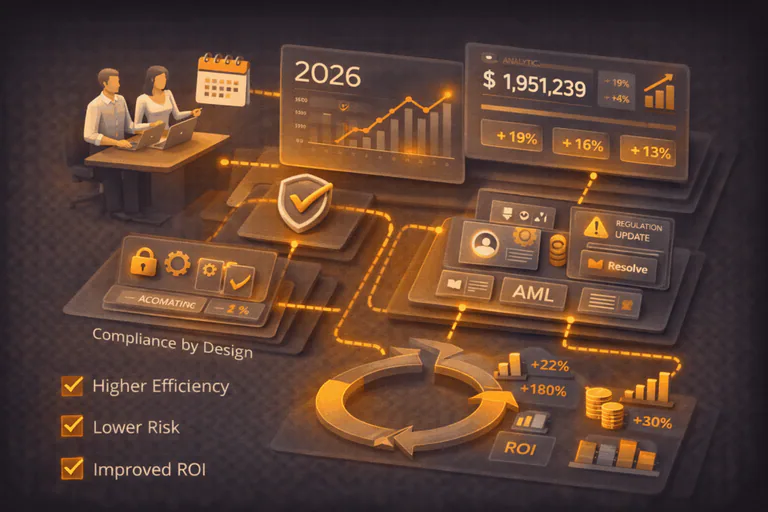
Well-designed compliance and security systems protect ROI, rather than undermine it.
The Regulatory Reality Fintech Teams Face in 2026
Fintech apps operate across a complex regulatory landscape that includes:
- Financial data protection laws
- Payment and transaction regulations
- Identity verification requirements
- Anti-money laundering (AML) rules
- Platform and partner compliance policies
What’s changing is not just the number of rules, but how enforced they are.
By 2026:
- Automated audits are more common
- Platform enforcement is faster
- Payment providers act as compliance gatekeepers
- Regulatory expectations shift continuously
This means fintech apps must be compliance-ready by design, not retrofitted after launch.
Get expert support to launch and scale your mobile app
Secure Architecture: The Foundation of Compliant Fintech Apps
Compliance begins with architecture, not documentation.
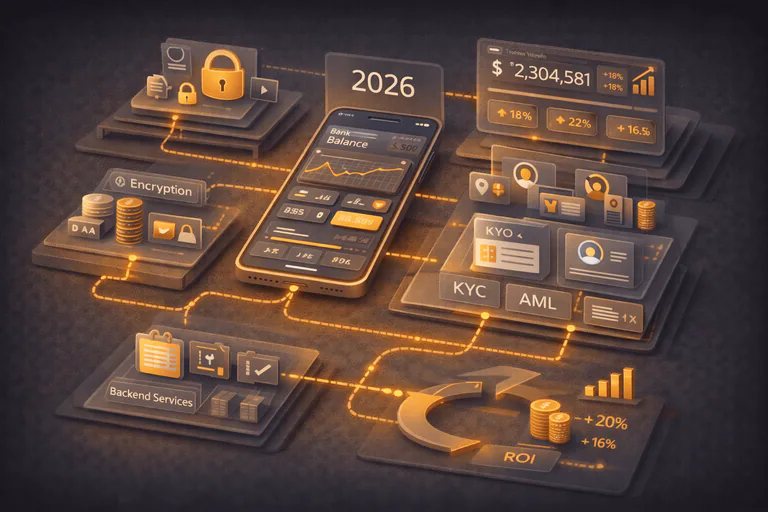
A secure fintech architecture in 2026 must support:
- Data isolation and segmentation
- Strong identity and access controls
- Encrypted data at rest and in transit
- Clear audit trails
- Controlled third-party integrations
When architecture is weak, compliance becomes fragile and expensive.
Architecture Decisions That Directly Impact ROI
Poor architectural choices create:
- Higher maintenance costs
- Slower feature delivery
- Increased security exposure
- Difficult compliance updates
Strong architecture enables:
- Faster iteration
- Easier regulatory adaptation
- Lower long-term operational overhead
- Better investor confidence
In fintech, architecture is a business decision.
Compliance as a Product Constraint, Not a Legal Layer
The most resilient fintech apps treat compliance as a product constraint, similar to performance or scalability.
This means:
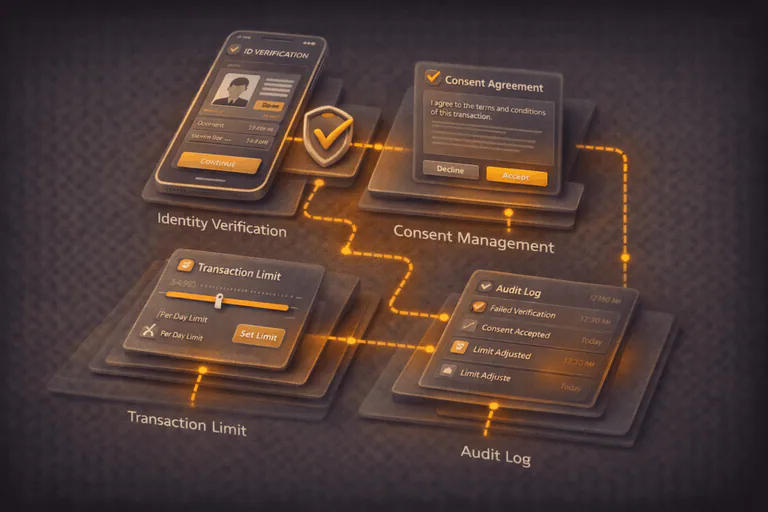
- UX flows designed around verification and consent
- Transaction logic built with limits and controls
- Clear user feedback around restrictions and failures
- System states that align with regulatory expectations
When compliance is invisible or confusing to users, trust erodes quickly.
Security Is Now a UX Concern
In fintech, users experience security through interaction:
- Authentication flows
- Verification steps
- Error handling
- Transaction confirmations
By 2026, fintech UX must:
- Feel secure without feeling hostile
- Communicate safeguards clearly
- Avoid unnecessary friction
- Respect accessibility and inclusivity
Security that frustrates users reduces ROI just as much as security failures do.
The ROI Problem: Where Fintech Teams Get Stuck
Many fintech apps struggle not because of compliance, but because compliance was added too late.
Common failure patterns include:
- Over-engineering early features
- Underestimating regulatory change
- Choosing rigid architectures
- Treating compliance as a one-time milestone
- Measuring ROI only through short-term growth
This leads to rising costs, stalled roadmaps, and reactive decision-making.
How Fintech Apps Can Deliver ROI While Staying Compliant
1. Build Modular, Adaptable Systems
Compliance rules change. Your architecture must adapt without full rewrites.
2. Automate Compliance Where Possible
Manual processes don’t scale. Automation improves accuracy and lowers costs.
3. Design UX With Compliance in Mind
Clear, predictable flows reduce errors and support trust.
4. Measure ROI Beyond Growth Metrics
Track:
- Operational efficiency
- Cost of compliance updates
- Time to regulatory change
- Incident recovery impact
ROI in fintech is long-term, not transactional.
Learn more about How to Track App Growth Metrics
Wondering what mobile app development really looks like?
What Will Differentiate Successful Fintech Apps in 2026
By 2026, leading fintech apps will:
- Treat compliance as a competitive advantage
- Invest early in secure architecture
- Balance friction with clarity
- Align engineering, product, and legal teams
- Build systems designed to evolve
Teams that ignore these realities struggle to survive platform and regulatory pressure.
When Fintech App Development Goes Wrong
Warning signs include:
- Frequent security patches
- Inconsistent compliance behavior
- Slow response to regulatory change
- Confusing user verification flows
- Rising infrastructure costs
These are usually architectural issues, not regulatory surprises.
Final Perspective: Compliance Is How Fintech Apps Scale Safely
Fintech app development in 2026 is not about avoiding regulation; it’s about designing for it.
Apps that align secure architecture, compliance, and ROI:
- Scale faster
- Earn user trust
- Adapt to change
- Protect long-term value
OpenForge works with fintech teams to design and build secure, compliant apps where architecture decisions support both regulation and ROI without slowing innovation.
📅 Schedule a Free Consultation to explore how your fintech app architecture can support compliance and growth in 2026 and beyond.
Frequently Asked Questions
By designing secure, modular architectures that embed compliance controls into core workflows rather than adding them after launch.
Poorly implemented compliance does. Well-designed compliance systems reduce long-term risk, cost, and operational friction.
Architecture determines how easily apps adapt to regulatory change, secure data, and maintain auditability.
Yes. Users experience security through authentication, verification, and transaction flows, making UX critical to trust.
Secure architecture, adaptability to regulation, and sustainable ROI, not just rapid feature delivery.