Schedule a Free Demo Schedule a Free Demo TALK TO AN EXPERT 1. What is a retail membership app? 2. Do membership apps actually increase revenue? 3. What features drive repeat revenue the most? 4. How do I measure membership app ROI?
In 2026, most US retailers don’t have a “growth problem.” They have a repeat problem. You can still buy traffic. You can still run promotions. But turning a first-time buyer into a second-time buyer, and then into a predictable, high-LTV customer, has become the real battleground. When acquisition costs climb and channels get noisier, the brands that win aren’t just louder… they’re stickier. That’s exactly why membership-focused mobile apps are getting serious budget. Not because “everyone needs an app,” but because an app can do what most loyalty programs fail to do: make value instant, make returning easy, and make engagement measurable.
Think of the best retail apps you’ve used recently. They don’t feel like a digital brochure. They feel like a shortcut: reorder in seconds, personalized offers that actually matter, a membership status that’s clear, and perks you can redeem without hunting through email. That’s the shift, loyalty has moved from “points in the background” to a product experience customers actively use.
At OpenForge, this kind of retention-first thinking is exactly what sits behind our approach to mobile app development, building apps that are fast, scalable, and designed around business outcomes, not feature bloat.
In this guide, we’ll break down the repeat-revenue mechanics US brands are leaning on in 2026, from membership tiers and wallet-first redemption to personalization and lifecycle messaging, then we’ll show how to measure ROI in a way that both marketers and finance teams can live with. And yes, we’ll keep it practical: what to build, what to avoid, and how to structure your app so customers come back because it’s genuinely easier than any alternative.
Table of Contents
Why repeat revenue matters more than acquisition in 2026
Customer acquisition is still important, but it’s not the only path to growth anymore. Retail leaders are focusing on repeat revenue because retention creates compounding value: members buy more often, engage more, and become easier to serve over time.
That said, loyalty doesn’t happen automatically. Harvard Business Review points out that loyalty programs can create real advantage only when friction is removed and the experience is designed well, otherwise programs can backfire through poor customer experience. In other words, “membership” has to feel useful, not annoying. You can see the behavior patterns HBR describes in their discussion of why loyalty programs sometimes fail to deliver value.
Membership apps vs. traditional loyalty programs (what’s different)
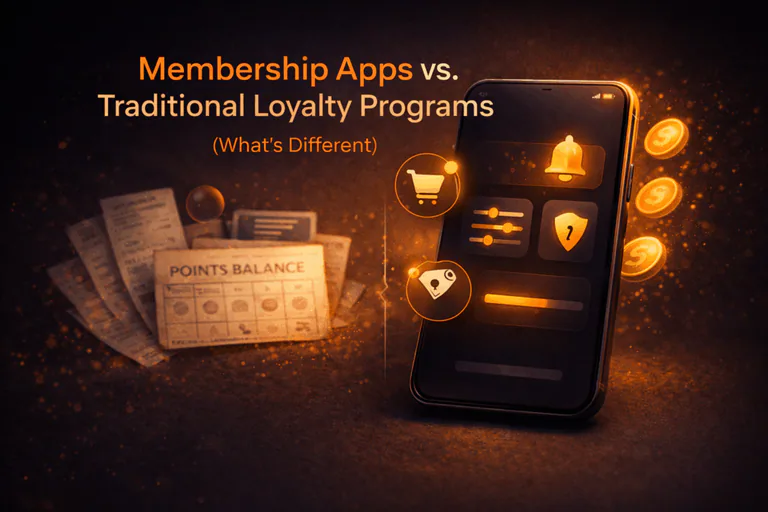
A traditional loyalty program usually lives in receipts, emails, or POS prompts, customers forget it exists. A membership app puts value directly in the user’s pocket and makes it visible during shopping moments.
A well-designed membership app tends to do three things consistently:
- Reduces friction (fast reorder, saved preferences, quick checkout)
- Makes value obvious (clear benefits, tier progress, instant rewards)
- Creates repeat triggers (reminders, back-in-stock alerts, member drops)
If you want a services-style internal anchor on your site for this, you can reference OpenForge’s Mobile App Development page as the “how we build performance-first apps” context, while keeping this article focused on strategy and ROI.
The Repeat Revenue Loop (the core structure winning apps engineer)
Instead of thinking in a funnel (which ends after purchase), membership apps work best as a loop:
1) Acquire → bring users in
Traffic comes from ads, search, store signage, email, and social.
2) Activate → give a fast win
Activation means the user feels value quickly. Good activation moments include:
- adding a wallet pass
- unlocking a member perk instantly
- completing a first “reorder” in seconds
3) Engage → build habit
Habit comes from convenience + relevance: reorder, personalized offers, and timely reminders.
4) Monetize → increase frequency and basket size
Apps drive revenue by making repeat purchases easier and upsells smarter.
5) Retain → reduce churn
Retention is sustained by member benefits, tier progress, and lifecycle messaging.
A relevant internal link for this “loop thinking” is OpenForge’s From Downloads to Daily Users: A Mobile App Retention Playbook because it aligns directly with activation → engagement → retention mechanics.
Get expert support to launch and scale your mobile app
Features that drive repeat purchases in 2026
Not every feature increases repeat revenue. The best membership apps focus on a small set of high-impact mechanics.
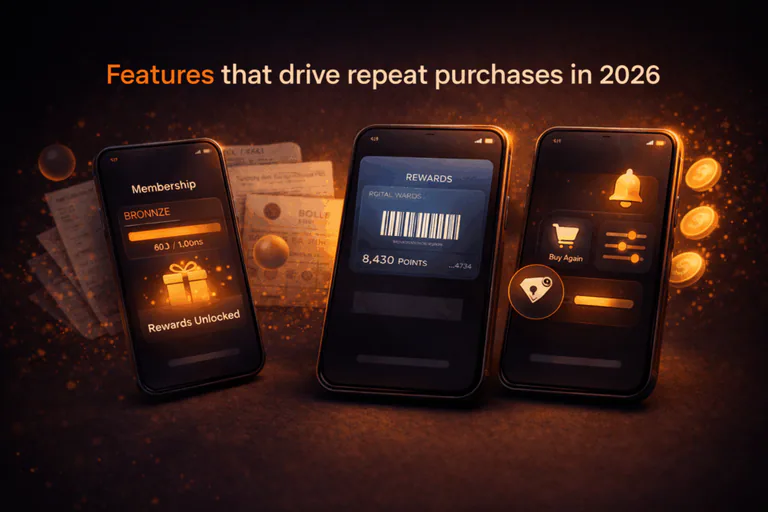
1) Tiered membership that feels like progress
Tiers work when customers can see progress and understand the payoff. The UI should make tier movement feel motivating, not confusing.
What to include
- Tier status visible on the home screen
- Next-tier progress (“$22 away from Gold”)
- Benefit clarity (what changes at each tier)
This is where poor structure kills ROI, if benefits are vague, users won’t chase them.
2) Wallet-first loyalty for in-store and omnichannel brands
Wallet integration is one of the highest-leverage upgrades because it makes redemption easier, especially in-store.
On iOS, brands use Apple Wallet passes to deliver loyalty cards, coupons, and offers in a native flow that users already trust. Many teams also reference the older but still practical PassKit pass creation guide to understand identifiers, barcode formats, and update logic for real deployments. On Android, the equivalent approach is building loyalty cards through Google Wallet loyalty cards so customers can redeem without opening the app every time.
Wallet isn’t just “nice” it increases the chances customers actually use rewards, and usage builds habit.
3) Personalization that connects directly to revenue (not just UX)
Personalization is not a vibe; it’s a revenue lever when it’s measurable. McKinsey notes that strong personalization can lift revenues and improve marketing ROI, but the lift depends on execution and data quality.
High-ROI personalization examples
- “Reorder your usual” suggestions (frequency increase)
- Bundles based on prior purchases (AOV increase)
- Smart offers tied to customer lifecycle (retention increase)
- Search that learns preferences (conversion increase)
For internal linking that supports this, OpenForge’s AI for Customer Retention is a strong supporting page because it frames personalization and churn prediction in practical, retention-driven terms.
4) Reorder + replenishment flows (the real repeat engine)
This is where retail apps either win or lose. The goal is to make buying again feel effortless.
Reorder features that matter
- One-tap “Buy Again”
- Saved carts / saved lists
- Replenishment reminders (time-based or behavior-based)
- Smart substitutions for out-of-stock items
This is the difference between an app people browse and an app people rely on.
5) Performance-first UX (because slow apps leak revenue)
If the app is slow, customers won’t return often enough for membership to matter. In 2026, performance is not optional, load times, stability, and smooth checkout directly impact conversion and retention.
You can reinforce this with OpenForge’s trend-based internal article Mobile App Development Trends for 2026 since it emphasizes foundations that matter long after launch.
How US brands prove membership app ROI (without weak assumptions)
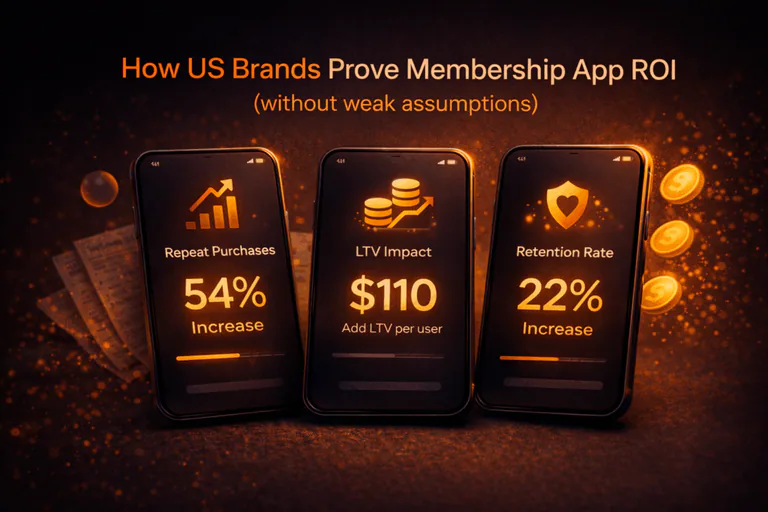
To defend ROI, brands move from “attribution stories” to “incremental impact.”
A simple ROI model leadership accepts
Use a clean structure:
Incremental Gross Profit – Total App Costs = Net Profit ROI = Net Profit / Total App Costs
Where “incremental” comes from lift in:
- Repeat purchase rate
- Purchase frequency
- Average order value (AOV)
- Reduced churn
- Lower reliance on paid media via owned channels
A classic Bain framework highlights that repeat customers can become dramatically more valuable over time, with evidence showing repeat customers spending significantly more later in the relationship than early on in certain categories. This is one reason retention investments can outpace acquisition in long-term profitability.
KPI stack (keep it tight, keep it defendable)
Instead of tracking dozens of metrics, high-performing teams pick KPIs that connect behavior → revenue:
Core membership KPIs
- Repeat purchase rate (RPR)
- Purchase frequency (orders per customer per month/quarter)
- Member conversion rate (non-member → member)
- Member retention (30/90/180-day)
- AOV for members vs non-members
- LTV (customer lifetime value)
Then they validate incremental lift using:
- cohort analysis (pre vs post membership)
- holdouts (a small group not exposed to certain benefits)
- controlled offer tests (A/B testing)
Wondering what mobile app development really looks like?
Common mistakes that kill repeat revenue (and how to avoid them)
Mistake 1: “Membership” without a clear value promise
If customers can’t explain the benefit in one sentence, it won’t stick.
Fix
- Define the membership promise clearly (shipping, savings, exclusives, convenience)
- Put the promise on the first screen after install
Mistake 2: Onboarding that delays value
Too many sign-up steps before payoff kills activation.
Fix
- Build onboarding around one fast “win” (wallet pass, instant perk, first reorder)
Mistake 3: Discount addiction that destroys margins
Discounts can train customers to wait for deals.
Fix
- Use benefits that drive frequency and engagement (tiers, early access, bundles, service perks)
HBR’s research-based discussions repeatedly point to “friction” and program complexity as reasons loyalty programs underperform when experience isn’t designed carefully, so avoid building a program customers must “work through.”
A practical 90-day roadmap to launch an MVP that drives repeat revenue
Phase 1 (Weeks 1–3): Strategy + measurement
Focus on:
- Membership value promise
- Tier design and benefit logic
- Data/events tracking plan
- Success metrics baseline
Phase 2 (Weeks 4–9): Build the MVP
Ship only what drives repeat revenue:
- Membership onboarding + tier progress UI
- Reorder flows and saved lists
- Wallet integration
- Lifecycle messaging setup
- Basic personalization (start simple, then scale)
Phase 3 (Weeks 10–12): Optimize and prove lift
- Improve onboarding conversion
- Tune benefits/offers
- Validate lift with cohorts and tests
- Improve performance and stability
For internal support that helps set expectations on budget, OpenForge’s How Much Does It Cost to Develop an App in 2025? is a useful reference for cost drivers and ongoing expenses.
ASO + lifecycle marketing (repeat revenue needs sustainable acquisition too)
Membership apps still need new users. The best brands reduce paid dependency by strengthening discovery and conversion in the app stores.
Two internal links that fit naturally here:
To connect marketing with retention (which is where ROI is proven), you can also link internally to OpenForge’s Mobile App Marketing Playbook for High-ROI Channels 2026 so readers understand acquisition is only valuable when cohorts retain.
Final takeaway
In 2026, US brands don’t “hope” for loyalty, they design for it. Membership apps win when they make value obvious, redemption effortless, and buying again faster than buying elsewhere. When those mechanics are in place, ROI becomes easier to prove because the behavior change is visible in repeat purchase rate, frequency, and LTV.
For execution discipline (especially scope + cost control), OpenForge’s internal guide Why Most App Development Costs Go Over Budget also supports a strong “do it right from day one” message.
Frequently Asked Questions
A retail membership app is a mobile app that offers benefits like tiers, rewards, and exclusive perks, designed specifically to increase repeat purchases and retention.
Yes, when they reduce friction and make benefits easy to use. Personalization and relevance can amplify results, and McKinsey reports measurable revenue lift from personalization when executed well.
Tier progress visibility, reorder flows, wallet-based redemption, smart personalization, and lifecycle messaging are the most consistent repeat revenue drivers.
Use member vs non-member comparisons, cohort retention, and incremental profit calculations, then validate with controlled tests where possible.